
 John Vucetich will discuss the intent of the law as it pertains to gray wolves as well as which federal agency or agencies are involved. He will identify the regions in the United States where recovery plans have been developed as well as the goals of those plans and whether or not they have been met. John will talk about court challenges and Congressional intervention in the Northern Rockies. He will cover the challenges of applying the ESA in regions where wolves have been restored. He will discuss if there are other areas of the U.S. where wolves could be restored, what resources are needed and what criteria, both biological and political, are necessary to effect restoration of wolves. Introduction by Rolf Peterson, Research Professor, College of Forest Resources and Environmental Science, Michigan Technological University.
Introduction by Rolf Peterson, Research Professor, College of Forest Resources and Environmental Science, Michigan Technological University
Presenter:
- John Vucetich is a Distinguished Professor from Michigan Technological University. He has led and co-led research on the wolves of Isle Royale for the past three decades. He is the author of more than 200 papers and two books on various aspects of carnivore conservation. Vucetich has testified before subcommittees of both houses of Congress on wolf conservation and the Endangered Species Act. He is frequently sought by governments and NGOs around the world for insight on wolf conservation.

Cecilia Di Bernardi will give an update on the change in distribution of gray wolves in the European subcontinent over the past 20 years. She will talk about how wolves have proliferated and the speed at which this has occurred. Cecilia will discuss wolf-human conflicts regarding livestock and big game animals as well as the issue of human safety. Additionally, she will describe the European Union’s and individual countries’ legal standing and policies for managing wolves.
Presenter:
- Cecilia Di Bernardi is a researcher at the Swedish University of Agricultural Sciences and a member of the Scandinavian Wolf Research Project SKANDULV. Her research on large carnivore ecology and management integrates molecular tools, GPS telemetry, and long-term demographic data to investigate feeding ecology, space use, and fitness of large carnivores in human-dominated landscapes. She recently co-led, together with the Large Carnivore Initiative for Europe (LCIE), a Europe-wide assessment documenting the continuing recovery of wolves across Europe.
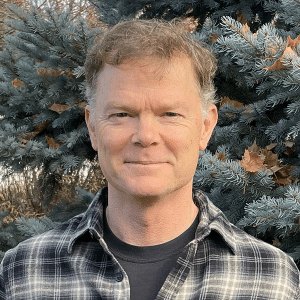 Dan MacNulty will present what his research has shown about Yellowstone’s trophic cascade. He will provide a brief review of early examinations that led to conclusions of cascading ecological alterations based on wolf-elk predation dynamics. He will deliver a primer on the latest results from his group about the causes (wolves vs other predators, including humans) and consequences (magnitude of vegetation recovery, especially aspen) of the Yellowstone cascade. Introduction by Dick Thiel, IWC Board member.
Presenter:
- Dan MacNulty is a Professor of Ecology in the Department of Wildland Resources at Utah State University. He earned his PhD in Ecology and MS in Wildlife Conservation from the University of Minnesota and a BA in Environmental Science from the University of Colorado Boulder. Since beginning his career as a volunteer on the Yellowstone Wolf Project in 1995, he has studied Yellowstone wolves to advance understanding of predator–prey interactions and the ecological consequences of predator recovery.
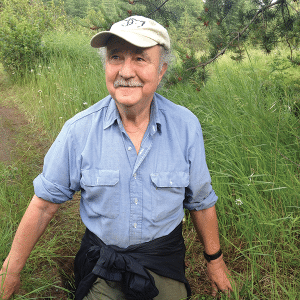 L. David Mech is an Emeritus Senior Research Scientist with the U.S. Geological Survey and an Adjunct Professor at the University of Minnesota. Dave holds a B.S. degree from Cornell University and a Ph.D. and an honorary doctorate degree from Purdue University. He has published 500+ articles and 13 books. Dave has studied wolves in Minnesota, Isle Royale, Alaska, Yellowstone, and Ellesmere Island, Canada. He chaired the IUCN Wolf Specialist Group of the World Conservation Union from 1978 to 2013 and is founder and board member of the International Wolf Center.
Doug Smith has studied wolves and other wildlife for 45 years. He came to Yellowstone National Park in 1994 to work as a project biologist on gray wolf reintroduction, and he served as Project Leader for the Yellowstone Wolf Project from 1997 to 2022. Doug received a B.S. degree in Wildlife Biology from the University of Idaho in 1985, a Master’s in biology from Michigan Technological University in 1988, and a PhD in Ecology, Evolution, and Conservation from the University of Nevada, Reno in 1997. Prior to Yellowstone, Doug studied under Dr. Rolf Peterson and Dr. L. David Mech. He worked for Rolf Peterson at Isle Royale National Park in Michigan (1979-1994) and for Dave Mech in northeastern Minnesota (1983). He has authored numerous scientific publications, been featured in television specials and interviews and has written and edited several books. Doug has received numerous awards, most recently the Distinguished Service Award, the highest honor of the U.S. Department of the Interior presented by the Secretary of the Interior.
Steven H. Fritts was employed by the U.S. Fish and Wildlife Service for 32 years. His Ph.D. is from the University of Minnesota where he was Dave Mech’s first graduate student. Later he was hired by Dave, then served as Dave’s supervisor and has been a long-time friend. Steve did much of the preparatory work for recovery of wolves to Yellowstone National Park and Idaho, developed the overall reintroduction design and led the capture and shipment efforts in Alberta and British Columbia.
 “A Good Wolf” is a feature-length documentary film that follows three groups of Alaskans as they find diverging ways to navigate a volatile controversy surrounding a single tract of land adjacent to Mount McKinley (Denali) National Park—a struggle between state and federal authorities, fur trappers and wildlife advocates, and competing human interests on public lands. Hanging in the balance are some of America’s most iconic animals and wild places.
Introduction and Q&A:
- Bridget Borg is a wildlife biologist for the National Park Service, Denali National Park and Preserve. Bridget grew up exploring the fields of rural Minnesota, establishing her love of the outdoors early on. After graduating from the University of Wisconsin–Madison, Bridget’s career took her to New Mexico, the Florida Keys and eventually to Alaska where she found her true sense of home. Bridget received her PhD from the University of Alaska Fairbanks in Biological Sciences. She completed her dissertation on wolves in Denali and went on to lead the wolf and caribou research programs. As lead researcher, she oversees cutting-edge research ranging from population dynamics to genetics and behavior. She emphasizes building collaborations and improving outreach and strives to help people make connections to wildlife and wildlands. Bridget enjoys exploring the land with her two daughters, husband, and team of sled dogs.
- Ramey Newell is a filmmaker and multidisciplinary artist based in British Columbia, Canada. Her award-winning films have screened at numerous film festivals and in galleries, museums and other art spaces throughout the United States, Canada, the United Kingdom, Europe, and Australia. Her photographic work has been exhibited at venues such as The Polygon Gallery in Vancouver, Gallery 44 in Toronto, and the New York Hall of Science. She holds a Master of Fine Arts from the University of British Columbia.
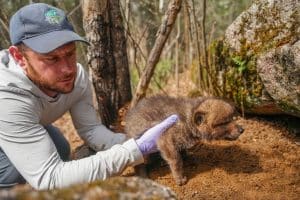 Tom Gable will review the age-old controversy surrounding wolves and the perceived and real impacts they have on recreational deer hunting opportunities. He will give a brief historical perspective of the early efforts undertaken to understand wolf predation on deer by International Wolf Center founder, Dr. L. David Mech and others. Tom will then focus on new insights and the longstanding attempt to tease apart how wolf predation and winters affect deer and deer hunting. Finally, this presentation will explore the ways in which messaging of scientific investigations can reach broader audiences, including deer hunters. Introduction by Brian Roell, Michigan Department of Natural Resources.
Presenter:
- Tom Gable is the project lead for the Voyageurs Wolf Project, and he has been studying wolves in the Greater Voyageurs Ecosystem (GVE) of northern Minnesota for over a decade. Tom’s research is focused on understanding the predation behavior, population dynamics, and reproductive ecology of wolves in the GVE. Although Tom studies many aspects of wolf ecology, he is particularly fascinated with wolf-beaver dynamics, and much of his work has focused on untangling the relationship between this apex predator and ecosystem engineer.